Dr. Yvonne Nguyen · Dermatology Conditions

Hair Loss

Accurate diagnosis is the essential foundation for effective hair loss treatment, and early intervention matters.

Hair loss, medically called alopecia, is more common than most people realise, and more treatable than many assume. Understanding which type you have is the essential first step.

The most common forms include:

Androgenetic alopecia (pattern hair loss): the most prevalent type in both men and women. Men typically experience a receding hairline and crown thinning; women experience diffuse thinning across the top of the scalp, with the frontal hairline largely intact.

Alopecia areata: an immune-mediated condition in which the immune system attacks hair follicles, causing patchy, often sudden hair loss. It ranges from a few small patches to loss of the entire scalp (alopecia totalis) or body (alopecia universalis).

Telogen effluvium: widespread shedding triggered when a significant stressor, such as illness, surgery, childbirth, crash dieting, or prolonged stress, shifts large numbers of follicles into the resting phase, typically appearing 2–4 months after the trigger.

Scarring alopecias, including lichen planopilaris, frontal fibrosing alopecia, and discoid lupus, involve inflammation that destroys follicles and replaces them with scar tissue. Because follicles cannot regenerate once scarred, early diagnosis and treatment is critical to preserve remaining hair.

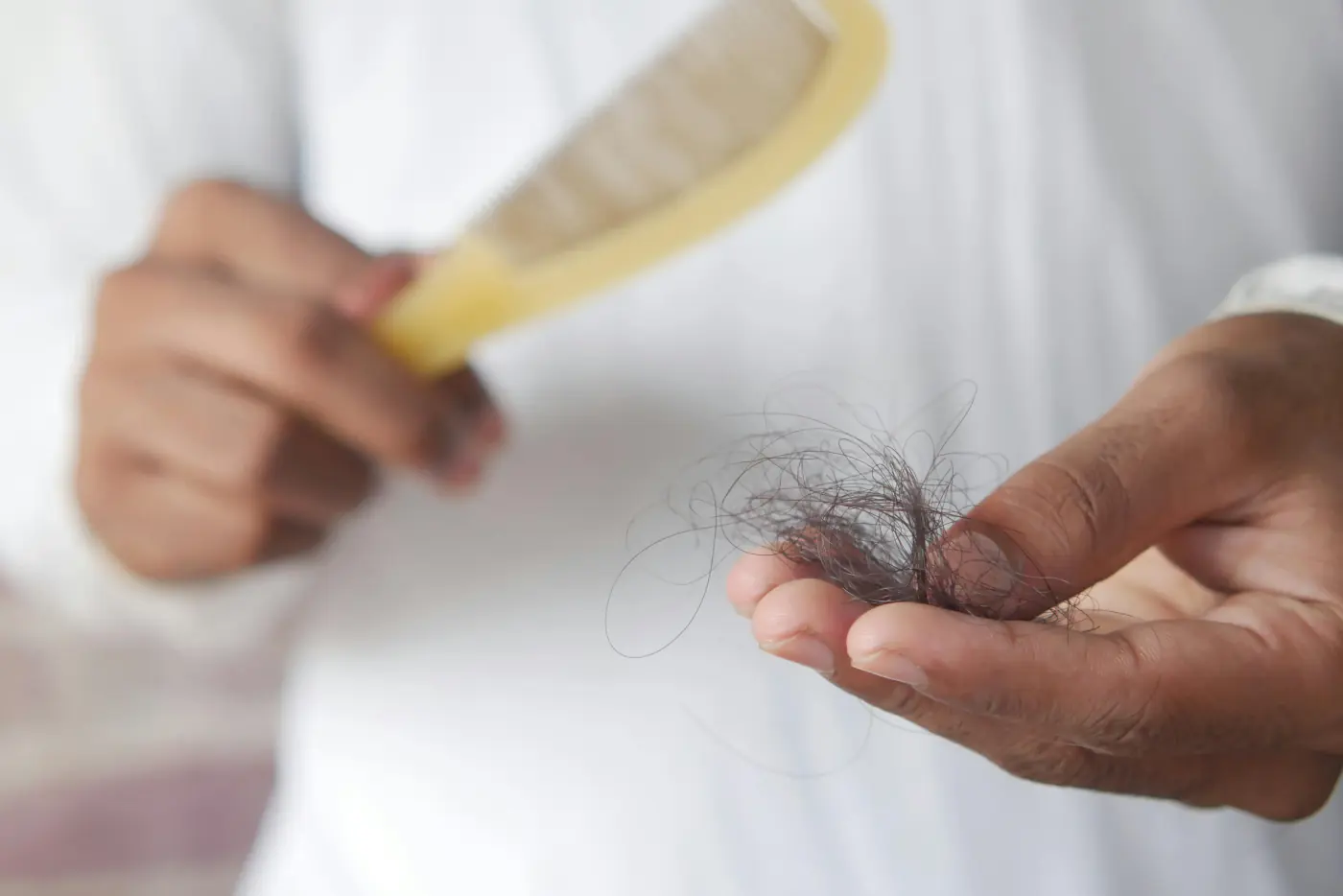
Scalp and hair image representing specialist hair loss diagnosis and treatment

Pattern hair loss is driven by genetic sensitivity of follicles to dihydrotestosterone (DHT). Alopecia areata involves immune dysfunction, with stress and genetic factors playing a role. Telogen effluvium reflects the hair cycle's response to systemic stress. Nutritional deficiencies, particularly low ferritin and iron, are assessed routinely as a contributing factor in diffuse shedding.

How is it diagnosed?

A dermatologist will take a detailed history and examine the scalp using dermoscopy, a handheld magnifying instrument that reveals follicle health, inflammation, and surface changes not visible to the naked eye and is critical for distinguishing scarring from non-scarring alopecia. Blood tests assess iron, thyroid function, and hormone levels. A scalp biopsy may be recommended to confirm scarring alopecia.

For pattern hair loss: options your dermatologist may discuss include minoxidil (available topically or as an oral prescription medication), treatments that reduce the hormonal drivers of follicle miniaturisation, and platelet-rich plasma (PRP) injections. Hair transplant surgery may be appropriate for stable pattern loss.

For alopecia areata: options range from corticosteroid injections for localised patches to systemic therapies for more extensive disease. JAK inhibitors, a class of targeted treatment, are now available in Australia for suitable patients with significant disease.

For telogen effluvium: addressing the underlying cause, such as nutritional deficiency or systemic stressor, is the primary approach. Most cases resolve within 6–12 months.

For scarring alopecias: the goal is to halt progression. Anti-inflammatory treatments delivered topically or systemically suppress the destructive process. Early treatment is essential, as hair lost to scarring cannot regrow.

Hair treatment responses are measured in months. Your dermatologist will explain realistic expectations for your specific condition.

  • Avoid hairstyles placing sustained tension on follicles, as tight braids, ponytails, and extensions can cause traction alopecia
  • Handle hair gently, particularly when wet
  • Ensure adequate nutrition, as restrictive diets are a common trigger of telogen effluvium
  • Protect the scalp from sun exposure
  • Hair loss is occurring in patches, or the scalp shows redness, scaling, or tenderness
  • Shedding has been significant or continued for more than 2–3 months
  • Thinning is noticeable at the crown or along the part
  • The frontal hairline is gradually receding, particularly in women
  • Over-the-counter treatments have not helped after 6 months

Discuss Hair Loss with Dr. Nguyen

Sources and further reading

These external resources provide general educational information and do not replace individual medical advice.